
Pakistan has intensified its efforts to bring the US and Iran back to the negotiating table to end the war in West Asia, following President Trump's extension of the ceasefire. Pakistani officials have engaged with Iranian, Turkish, and British counterparts to promote dialogue and diplomacy for a peaceful resolution.

Indian Grandmaster Koneru Humpy has withdrawn from the FIDE Women's Candidates Tournament, citing concerns over her personal safety amidst the West Asia conflict.

US President Donald Trump announced he halted planned military strikes on Iran following requests from Qatar, Saudi Arabia, and the UAE, citing ongoing discussions that could lead to a deal.

US President Donald Trump has asserted that the destruction of an American military aircraft will have no bearing on diplomatic discussions with Iran, according to a report by NBC News.

The United States has launched a fresh wave of precision strikes, hitting approximately 90 Iranian military targets deep inside Iran, further intensifying a rapidly expanding regional conflict, with Tehran warning of severe retaliation.

In view of the disruptive situations, the Central government has also announced a financial relief package of Rs 497 crores aimed at helping exporters affected by disruptions in West Asia.

Iranian Foreign Minister Seyed Abbas Araghchi announced the official end of the war and warned that any Israeli attack on Lebanon would violate an agreement between Iran and the United States. He also stated that negotiations on nuclear issues and sanctions lifting would begin on Saturday, led by Iran's Parliamentary Speaker M B Ghalibaf and US Vice President J D Vance.

Iran on Thursday spelled out three conditions to end the war with Israel and the United States, which entered its thirteenth day today. Taking to X, Iran's President Masoud Pezeshkian said he reaffirmed the country's commitment to peace during talks with leaders of Russia and Pakistan.

Following the death of Ayatollah Ali Khamenei, his son and successor, Mojtaba Khamenei, issued a "revenge list" featuring 13 world leaders, including Donald Trump and Benjamin Netanyahu, with a graphic depicting them as targets, amidst escalating regional hostilities and US reports of an Iranian assassination plot against Trump.

Iran's national soccer team attended visa appointments in Ankara, Turkey, applying for Canadian visas and some players also submitting applications for US entry ahead of the 2026 FIFA World Cup, which will be co-hosted by the United States, Canada and Mexico.

Iran's football coach, Amir Ghalenoei, has strongly criticised the United States for imposing travel restrictions on his team during the World Cup, claiming it unfairly hampered their preparation and performance.
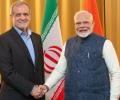
Prime Minister Narendra Modi has welcomed the understanding between the United States and Iran to end the conflict in West Asia, expressing hope that the pact will restore peace, stability, and ensure freedom of navigation in the region. The deal, aimed at ending a 107-day war that caused a global energy crisis, is set for signing on June 19.
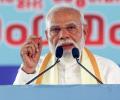
Prime Minister Narendra Modi criticised the Congress party and Rahul Gandhi during a rally in Kochi, Kerala, accusing them of being unaware of India's development and playing politics over the West Asia crisis. He urged voters to end the alternating rule of LDF and UDF governments and give the BJP-led NDA a chance to govern the state.

Iran launched their World Cup campaign in Los Angeles amid protests by Iranian-Americans, highlighting deep divisions over Tehran's government even as Team Melli drew passionate support from fans in the stands.

In a significant diplomatic manoeuvre aimed at de-escalating regional tensions, Iran has reportedly submitted a "new proposal" to the United States through Pakistani intermediaries.

Domestic LPG and commercial cylinder prices in India have seen a significant increase, driven by rising global energy costs linked to the conflict in West Asia. This marks the second price hike in less than a year, impacting households and businesses.

Amid escalating tensions, Iranian Deputy Foreign Minister Saeed Khatibzadeh declares Iran's unwavering commitment to a 'heroic nationalist defence' against perceived American and Israeli aggression, vowing to resist what he calls an 'invasion' to the very end.

A first World Cup win for seven-times African champions Egypt, 92 years after their debut, put them in charge though Iran's dogged performances in draws with Belgium and New Zealand means victory could also see them top Group G.

US President Donald Trump is set to visit China for talks with President Xi Jinping on trade, global issues, and the Gulf war. The visit aims to address trade frictions and other key issues, with high expectations for progress.

US Vice President J D Vance confirmed that peace talks with Iran are underway in Switzerland, with negotiators Steve Witkoff and Jared Kushner already present. Vance plans to join soon, expressing confidence in the US's strong negotiating position despite a delay caused by recent Israel-Lebanon firing.

Indian benchmark indices Sensex and Nifty surged significantly in early trade, tracking a global rally fueled by US President Donald Trump's declaration of an end to the war with Iran and a subsequent drop in crude oil prices.

It is time for India to step up and get Russia, China and Europe to agree to a joint appeal to all combatants. Time is of essence, tomorrow may be too late, asserts Colonel Anil A Athale, former head of the history division, ministry of defence.

For Iran's team, the FIFA World Cup has been marred by fraught politics at home, the war with the US, and tensions over whether they would actually be able to set foot on US soil to play their games.

Prime Minister Narendra Modi has called for a swift end to the conflicts in West Asia and Ukraine, emphasising the importance of dialogue and diplomacy. He made the remarks after talks with Finnish President Alexander Stubb, where they also agreed to a strategic partnership in digitalisation and sustainability.

The harsh truth is that the US is no longer a reliable partner, cautions Ramesh Menon.

'In such a scenario, Iran could proclaim itself victor, rebuild, re-enforce its diminished regional proxies to further destabilise neighbouring nations and take control of the Persian Gulf and Strait of Hormuz.'

US President Donald Trump stated that Iran is eager to make a deal and predicted a sharp decline in oil prices due to abundant supply, amidst a Senate resolution to limit his war powers in Iran.

Iran has announced the closure of the Strait of Hormuz, citing Israel's continued strikes in Lebanon and alleged violations of a ceasefire agreement. This move comes as both Israel and Hezbollah accuse each other of breaching the truce, with casualties rising in southern Lebanon.

Pakistan Prime Minister Shehbaz Sharif announced that Pakistan would host the signing ceremony of a peace agreement between the US and Iran in Switzerland on June 19, calling it a "historic milestone" that ends a 107-day conflict and promises global economic stability.

US President Donald Trump and Pakistan Prime Minister Shehbaz Sharif have announced a landmark peace deal between the US and Iran, which includes the crucial reopening of the strategically important Strait of Hormuz and the immediate cessation of military operations in Lebanon.

Much will depend on how the protagonists use the current interlude to work proactively for the beginning of a durable settlement or, on the contrary, prepare for a new round of escalation, points out Ambassador M K Bhadrakumar.

The embassy also said that the exit must be undertaken in coordination with the mission.

Iran footballers faces cheers and jeers in their come-from-behind 2-2 draw against New Zealand in their FIFA World Cup final opener in Los Angeles on Monday.

The US Central Command announced a new wave of strikes against Iranian military infrastructure, aiming to degrade Tehran's ability to threaten civilian mariners and commercial vessels. This comes as US President Donald Trump described the situation as a 'skirmish' and suggested Iran wants to 'make a deal,' while Iran's Foreign Minister warned of a 'decisive response' to any aggression.
Iran has presented a multi-layered proposal to the US in an attempt to break the deadlock in peace talks, focusing on de-escalation and nuclear programme discussions.

US President Donald Trump has cautioned Israeli Prime Minister Benjamin Netanyahu that Israel risks international isolation if it resumes extensive military operations against Iran, following a volatile 24-hour period of escalating cross-border hostilities.

Saudi Arabia and the UAE are actively pushing Trump to take the war to its bitter finish and 'erase' Iran's presence in the geopolitics of the region. Simply put, the two most powerful Sunni Arab oligarchies are on the same page as Israel. Such interference increases the risk of a breakdown in dialogue between the US and Iran, points out Ambassador M K Bhadrakumar.

Iran's Deputy Foreign Minister Kazem Gharibabadi confirmed a peace deal with the United States, stating that Tehran will enter a 60-day negotiation period only after verifying Washington's commitments to ending hostilities, lifting the blockade, and releasing Iranian assets.

Amidst the ongoing conflict in West Asia, the Oil Ministry assures citizens that India's LPG supply remains secure, with no need for panic booking of cylinders. The normal delivery cycle of two-and-a-half days is being maintained, and crude oil is being sourced from diverse routes.

'It will take a long time to recover from the impact of this war.'
